
How to Start a Battery Recycling Business Business in India (2026): Cost, Profit & Step-by-Step Guide
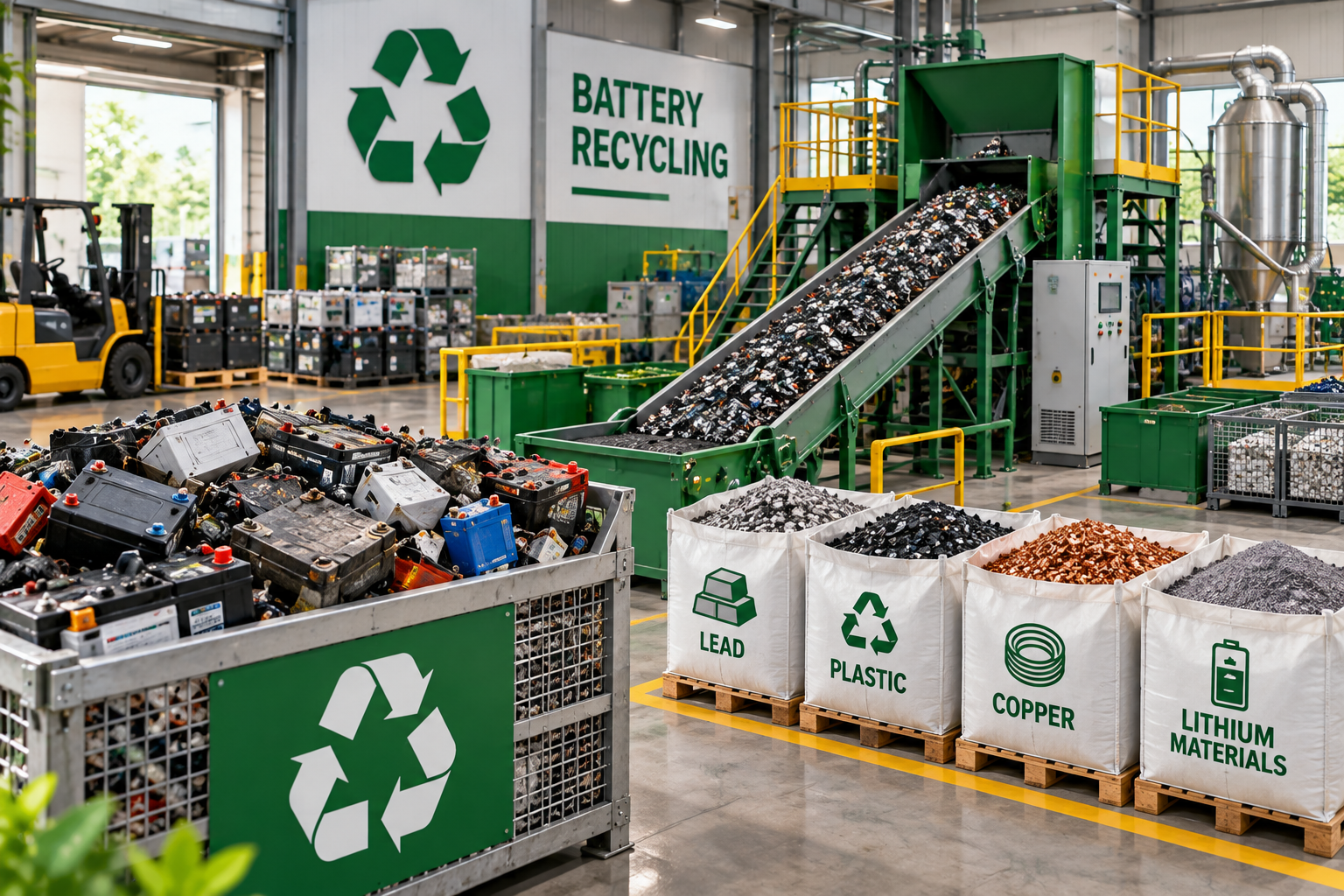
CPCB-authorised lead-acid & lithium battery collection + refurbishment aggregation. Collect used lead-acid batteries from mechanics / e-rickshaw drivers / solar installers, refurbish + resell as second-life; sell irreparable ones to CPCB-authorised smelters. Emerging lithium-ion side channel from EV OEMs (starter contracts with Ola/Ather refurb programme).
If you are evaluating a battery recycling business business in India, this guide covers the investment you need, where the money goes, how revenue builds up, the team required, the risks to plan for, and a 90-day launch plan — the same framework VentureKhoj uses in its feasibility reports.
Still deciding whether a battery recycling business suits your capital, city and skills? Find My Best-Fit Business in 8 quick questions.
Battery Recycling Business business at a glance
| Metric | Standard estimate |
|---|---|
| Investment range | ₹8 lakh – ₹15 lakh |
| Recommended capital | ₹11 lakh |
| Typical payback | ~32 months |
| Gross margin | 20% |
| Risk level | High |
| Time commitment | Full Time |
| Works best in | Tier-2 cities, Tier-3 cities, metros |
How much does it cost to start a battery recycling business business?
Most aspiring entrepreneurs launch a battery recycling business with ₹11 lakh in a Tier-2 city. Metro rents and fit-outs push the figure towards ₹15 lakh, while small towns can start closer to ₹8 lakh. Here is how the recommended budget is typically split:
Fixed costs (do not change much with city)
Typical fixed-cost line items for a battery recycling business: Equipment & Machinery, Licences & Registrations, Technology / Software, Contingency.
Variable · city-linked costs
City-linked line items you will budget for: Security Deposit / Advance Rent, Interiors & Fit-outs, Furniture & Fixtures, Initial Inventory, Initial Marketing, Working Capital (3–6 months).
🔒 The exact amount and budget share for each of these 10 line items is part of the full commercial details for Battery Recycling Business. Unlock it with the ₹99 Explore plan.
Prefer numbers tuned to you? Calculate My Business Numbers to re-base every line item to your own capital and city.
Revenue model: how a battery recycling business makes money
For a ₹11 lakh setup, revenue is built from daily customers, average ticket size, operating days and gross margin — netting out fixed and other monthly costs to arrive at your monthly profit, break-even and ROI.
🔒 The full revenue maths — daily customers, average ticket, monthly revenue, gross & net profit, break-even months and Year-1 ROI is part of the full commercial details for Battery Recycling Business. Unlock it with the ₹199 Compare plan.
What drives revenue up or down:
- Capacity utilisation × price/unit
- Anchor-buyer volume
- Blended realisation across SKUs
- Export / premium mix
Typical profit margin range: 8–20% (Depends on utilisation & value-add; low if commodity).
Cost structure to watch
- Raw material (50–65%)
- Utilities & fuel (5–12%)
- Labour (12–20%)
- Depreciation on machinery
Working-capital items to budget for:
- Raw material 45–75 days
- Receivables 60–90 days
- WIP + finished-goods stock
- Salary + power buffer 2 months
Team and equipment
Staffing you will typically need:
- Plant supervisor
- Machine operators (3–10)
- Quality checker
- Store keeper
- Maintenance technician
Equipment & setup checklist:
- Primary production machinery
- Compressor / boiler / utilities
- Testing & QA equipment
- Material handling (forklift, conveyor)
- Backup power (DG set)
Marketing channels that work for a battery recycling business
- IndiaMART / TradeIndia listings
- Industry expos & trade shows
- Vendor development with anchor buyers
- Direct-sales / channel partners
Risks and how to manage them
- Machinery breakdown & production downtime — severity: High
- Raw-material price volatility — severity: High
- Working capital cycle 60–90 days on receivables — severity: High
- Buyer concentration (top-3 clients > 60%) — severity: Medium
- Pollution / factories act compliance — severity: Medium
- Skilled operator attrition — severity: Medium
Critical success factors
- OEE ≥ 65% and predictive maintenance
- Certifications matched to buyer (BIS, ISO, GMP)
- 1–2 anchor buyers + long-tail diversification
- Vendor development for critical inputs
KPIs to track every week
- OEE %
- Yield / rejection %
- On-time delivery %
- Working-capital days
- Order book coverage (months)
👉 ₹499 Feasibility plan — unlock 10 ideas and get a custom feasibility report for Battery Recycling Business with your own numbers.
90-day launch plan
- Days 1–30 — Set up: finalise location and lease, register the business, apply for licences, order equipment, and lock supplier terms.
- Days 31–60 — Build: complete interiors and fit-outs, hire and train the core team, set up billing/inventory software, and start pre-launch marketing.
- Days 61–90 — Launch & stabilise: soft launch with a limited menu/catalogue, collect reviews, tune pricing and hours, and track the KPIs above daily.
Frequently asked questions
Is a battery recycling business business profitable in India?
Yes — with disciplined cost control, a standard setup earns a gross margin of about 20% and pays back the investment in roughly 32 months.
What is the minimum investment to start a battery recycling business?
Around ₹8 lakh in a small town; ₹11 lakh is the recommended budget for a Tier-2 city.
Which cities are best for a battery recycling business business?
It works well in Tier-2 cities, Tier-3 cities, metros. Use VentureKhoj's city pages to see the city-adjusted budget for your location.
How do I get a personalised feasibility report?
Answer the 8 questions, open the Battery Recycling Business idea page, freeze your own cost and revenue numbers, and generate the feasibility report on the ₹499 Feasibility plan — it uses your numbers, not averages.
Business ideas matched to this article
Battery Recycling Business
CPCB-authorised lead-acid & lithium battery collection + refurbishment aggregation

Biogas Plant Consultancy
Design + build 25–100 kg/day domestic and dairy-farm biogas plants across Gujarat & Maharashtra

Energy Audit & ESCO Consulting
BEE-certified energy audits for MSME + ESCO-model energy retrofits with shared savings

EV Battery Swapping Station
60-second battery-swap station for electric 2W / 3W fleet riders with subscription plans and telematics
Ready to explore your Battery Recycling business?
Check whether this business suits you or calculate the numbers for your city.
Related reading
How to Start a Solar Water Pump Installer Business in India (2026): Cost, Profit & Step-by-Step Guide
How to start a solar water pump installer business in India: investment (₹5 lakh–₹9 lakh), cost breakdown, revenue model, team, licences, risks and a 90-day launch plan.
How to Start a Solar Panel Cleaning Service Business in India (2026): Cost, Profit & Step-by-Step Guide
How to start a solar panel cleaning service business in India: investment (₹3.5 lakh–₹6.5 lakh), cost breakdown, revenue model, team, licences, risks and a 90-day launch plan.
How to Start an Energy Audit & ESCO Consulting Business in India (2026): Cost, Profit & Step-by-Step Guide
How to start an energy audit & esco consulting business in India: investment (₹4 lakh–₹7.5 lakh), cost breakdown, revenue model, team, licences, risks and a 90-day launch plan.
How to Start a Biogas Plant Consultancy Business in India (2026): Cost, Profit & Step-by-Step Guide
How to start a biogas plant consultancy business in India: investment (₹3 lakh–₹5.5 lakh), cost breakdown, revenue model, team, licences, risks and a 90-day launch plan.
How to Start an EV Battery Swapping Station Business in India (2026): Cost, Profit & Step-by-Step Guide
How to start an ev battery swapping station business in India: investment (₹25 lakh–₹50 lakh), cost breakdown, revenue model, team, licences, risks and a 90-day launch plan.
How to Start a Rooftop Solar EPC Business Business in India (2026): Cost, Profit & Step-by-Step Guide
How to start a rooftop solar epc business business in India: investment (₹8 lakh–₹15 lakh), cost breakdown, revenue model, team, licences, risks and a 90-day launch plan.