
7 Best Manufacturing Business Ideas in India for 2026

India's manufacturing sector is having a rare moment. The government's Production Linked Incentive (PLI) schemes have pumped over ₹1.97 lakh crore into 14 sectors since 2020, GST input credit has made raw material sourcing cleaner, and Tier-2/3 cities now have industrial estates with subsidised land and power. For a first-time founder, manufacturing still sounds intimidating — machines, labour, compliance — but the truth is several categories can be started with less capital than a mid-sized restaurant.
The catch is picking an idea that matches your city's raw material access, labour pool and your own risk appetite. A packaging unit that thrives in industrial Pune may struggle in a small district town with no anchor customers nearby. Below are seven manufacturing ideas we see repeatedly validated by founders across India, each with real capital, margin and payback ranges for 2026.
Why Manufacturing Deserves a Second Look in 2026
The policy tailwind
Beyond PLI, most state governments now offer 15-25% capital subsidy on plant and machinery for MSMEs under their industrial policies, plus stamp duty waivers on land in designated clusters. Odisha, Uttar Pradesh, Madhya Pradesh and Tamil Nadu have been particularly aggressive in 2025-26.
The demand tailwind
Rising per-capita consumption, e-commerce-driven packaging demand, and import substitution (especially in electronics assembly and specialty chemicals) mean small manufacturers now have B2B customers actively looking for reliable local supply, not just B2C retail shelves.
How We Picked These Ideas
Each idea below was filtered on four criteria:
- Capital under ₹30 lakh — accessible via a mix of savings, MUDRA loan, and MSME term loan
- Gross margin of 15% or higher — enough to survive input cost swings
- Payback under 24 months — reasonable for a first-time operator
- Proven demand — not speculative, already selling in Indian markets today
7 Best Manufacturing Business Ideas in India for 2026
1. Eco-friendly disposable plates and cutlery (areca leaf / paper)
Areca leaf and bagasse-based plates are replacing plastic disposables fast, driven by state-level single-use plastic bans in 20+ states.
- Capital: ₹3-6 lakh
- Margin: 25-35%
- Payback: 8-12 months
- Best in: Tier-2/3 towns near areca or sugarcane belts (Karnataka, Kerala, Andhra Pradesh, UP)
2. Liquid detergent, handwash and floor cleaner manufacturing
Home and institutional cleaning demand has grown steadily post-2021, and formulation costs are low if you buy active ingredients in bulk.
- Capital: ₹5-10 lakh
- Margin: 30-40%
- Payback: 10-14 months
- Best in: Tier-2/3 cities with wholesale kirana or B2B institutional buyers nearby
3. Corrugated box and packaging manufacturing
Every e-commerce warehouse, FMCG distributor and D2C brand needs boxes locally — freight costs make distant suppliers unviable, so demand is inherently local.
- Capital: ₹15-30 lakh
- Margin: 15-20%
- Payback: 18-24 months
- Best in: Industrial hubs near Tier-1/2 cities (Pune, Ahmedabad, Coimbatore, Indore)
4. Agarbatti (incense stick) manufacturing
India consumes over 1,500 tonnes of agarbatti daily, and a large share is still imported bamboo-stick based — a genuine import-substitution opportunity with PLI support for the sector.
- Capital: ₹2-5 lakh
- Margin: 20-30%
- Payback: 6-10 months
- Best in: Tier-3 towns and rural clusters with low labour cost
5. Papad, pickle and spice powder processing
Food processing units selling through local kirana, D2C, and SHG networks have some of the fastest paybacks because raw material (grains, spices) is often sourced hyper-locally.
- Capital: ₹3-7 lakh
- Margin: 25-35%
- Payback: 9-12 months
- Best in: Tier-2/3 cities, especially women-led SHG-driven clusters in Gujarat, Rajasthan, Maharashtra
6. LED bulb and fixture assembly
With component costs falling and domestic demand rising under UJALA-style replacement cycles, small assembly units (not full chip manufacturing) remain viable for new entrants.
- Capital: ₹8-15 lakh
- Margin: 18-25%
- Payback: 12-18 months
- Best in: Tier-1/2 cities near electronics component markets (Delhi, Bengaluru, Ahmedabad)
7. Readymade garment stitching unit (private label / job work)
Instead of building your own brand, taking job-work orders from established garment exporters or D2C labels reduces marketing risk while keeping machine utilisation high.
- Capital: ₹6-12 lakh
- Margin: 20-28%
- Payback: 10-15 months
- Best in: Tier-2/3 garment clusters (Tirupur, Ludhiana, Surat, Jaipur)
How to Choose the Right Idea for You
Match raw material to geography
A detergent unit needs chemical distributors within 50-100 km; an areca plate unit needs proximity to plantations. Don't fight geography — use it.
Check your working capital cycle
B2B manufacturing (boxes, job-work garments) usually means 30-60 day credit to buyers, so budget for at least 2 months of expenses as working capital buffer beyond your machine cost.
Validate one anchor customer before scaling
Most successful small manufacturers we've studied secured one reliable bulk buyer (a distributor, exporter, or institutional client) before investing in a second machine. Pre-orders reduce payback risk significantly.
Common Mistakes to Avoid
- Over-investing in capacity on day one — start with one shift, one machine, and scale only after 6 months of consistent orders
- Ignoring compliance early — GST registration, Udyam (MSME) registration, and pollution control clearance (where applicable) should be done before, not after, machine installation
- Underpricing to win first customers — many first-time manufacturers price at cost-plus-10%, leaving no room for material cost inflation, which averaged 6-9% annually across plastics and chemicals in the last two years
- Skipping quality certification — for food and cleaning products, FSSAI or BIS certification (where required) is often the deciding factor for larger institutional buyers
Key takeaway: The best manufacturing business in India isn't the one with the highest margin on paper — it's the one where your city already has the raw material, labour, and at least one credible buyer within reach. Validate that local fit before you sign a machine purchase order.
Choosing between these seven ideas depends heavily on your city's industrial ecosystem, your available capital, and how much hands-on production management you're willing to do daily. If you're unsure which manufacturing category fits your specific situation — city, budget, and risk profile — VentureKhoj's free 8-question feasibility assessment generates a personalised report in minutes, and our Explorer, Founder and Growth plans go deeper into vendor lists, compliance checklists, and localised demand data for your chosen idea.
Frequently asked questions
Which manufacturing business is best for beginners with low capital in India?
Agarbatti manufacturing and areca leaf/paper plate units are among the lowest-capital options, typically starting between ₹2-6 lakh with payback in 6-12 months. Both use simple machinery and don't require deep technical expertise to begin.
How much capital do I need to start a small manufacturing unit in India in 2026?
Most viable small manufacturing units fall between ₹3 lakh and ₹30 lakh depending on the category. Food processing and incense units are on the lower end, while packaging and LED assembly need ₹15-30 lakh due to machinery costs.
Is manufacturing more profitable than trading or services in India?
Manufacturing margins (15-40% depending on category) can be comparable to trading, but manufacturing builds a defensible asset — machinery, processes, and B2B relationships — that's harder for competitors to replicate quickly compared to pure trading.
Which city is best to start a manufacturing business in India?
It depends on the product: Tier-1/2 industrial hubs like Pune, Ahmedabad and Coimbatore suit packaging and electronics assembly, while Tier-2/3 towns near agricultural belts suit food processing and eco-disposable products due to lower input and labour costs.
What government support is available for manufacturing MSMEs in 2026?
Most states offer 15-25% capital subsidy on plant and machinery under their industrial policies, along with Udyam registration benefits, collateral-free loans under CGTMSE, and sector-specific PLI incentives for electronics, textiles and specialty chemicals.
How does VentureKhoj help me pick the right manufacturing idea?
VentureKhoj's free 8-question assessment analyses your budget, city, and risk appetite to generate a personalised feasibility report. For deeper vendor lists, compliance steps, and local demand data, our Explorer, Founder and Growth plans provide detailed, idea-specific guidance.
Business ideas matched to this article
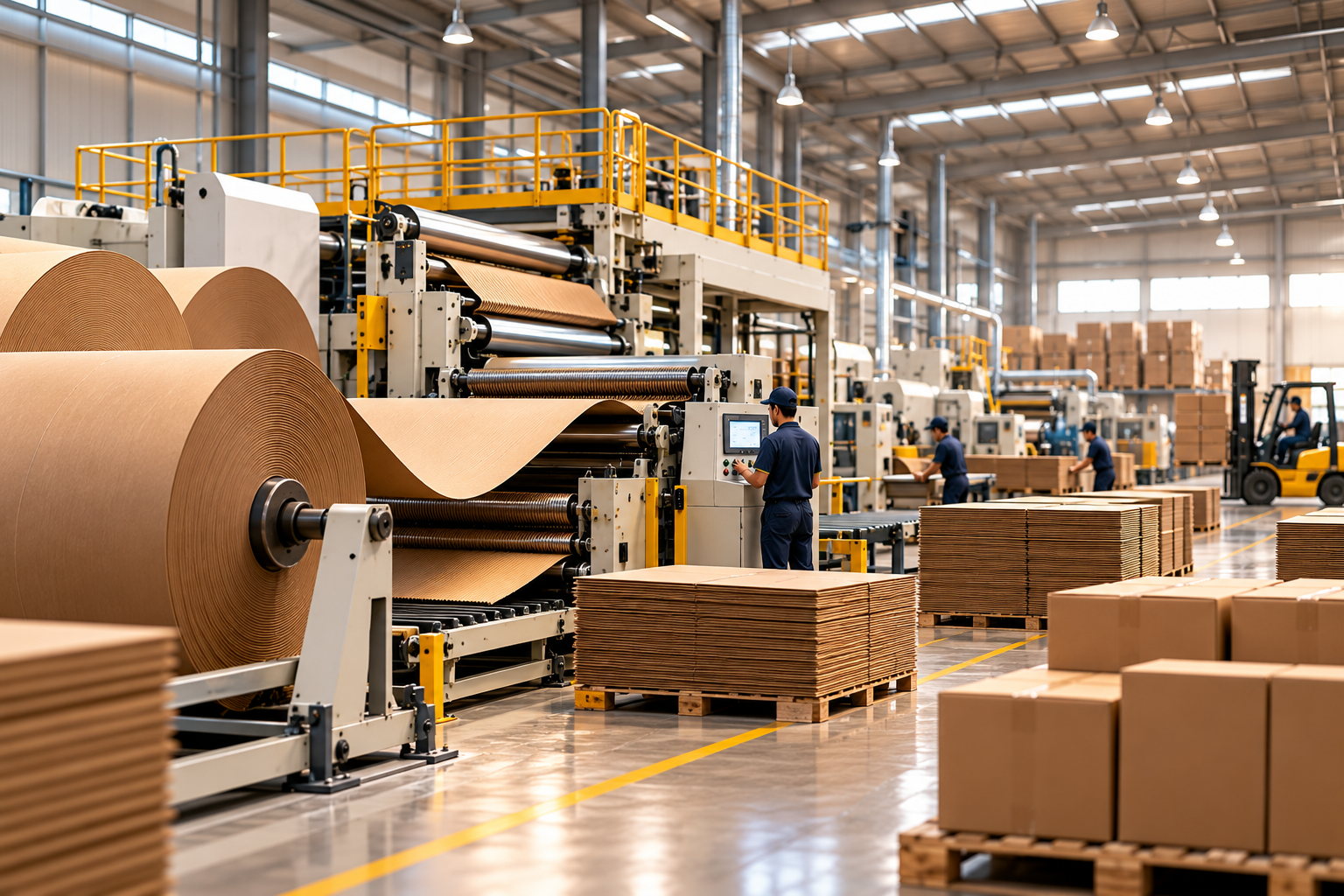
Corrugated Box Manufacturing Unit
B2B packaging plant serving FMCG & e-commerce shippers
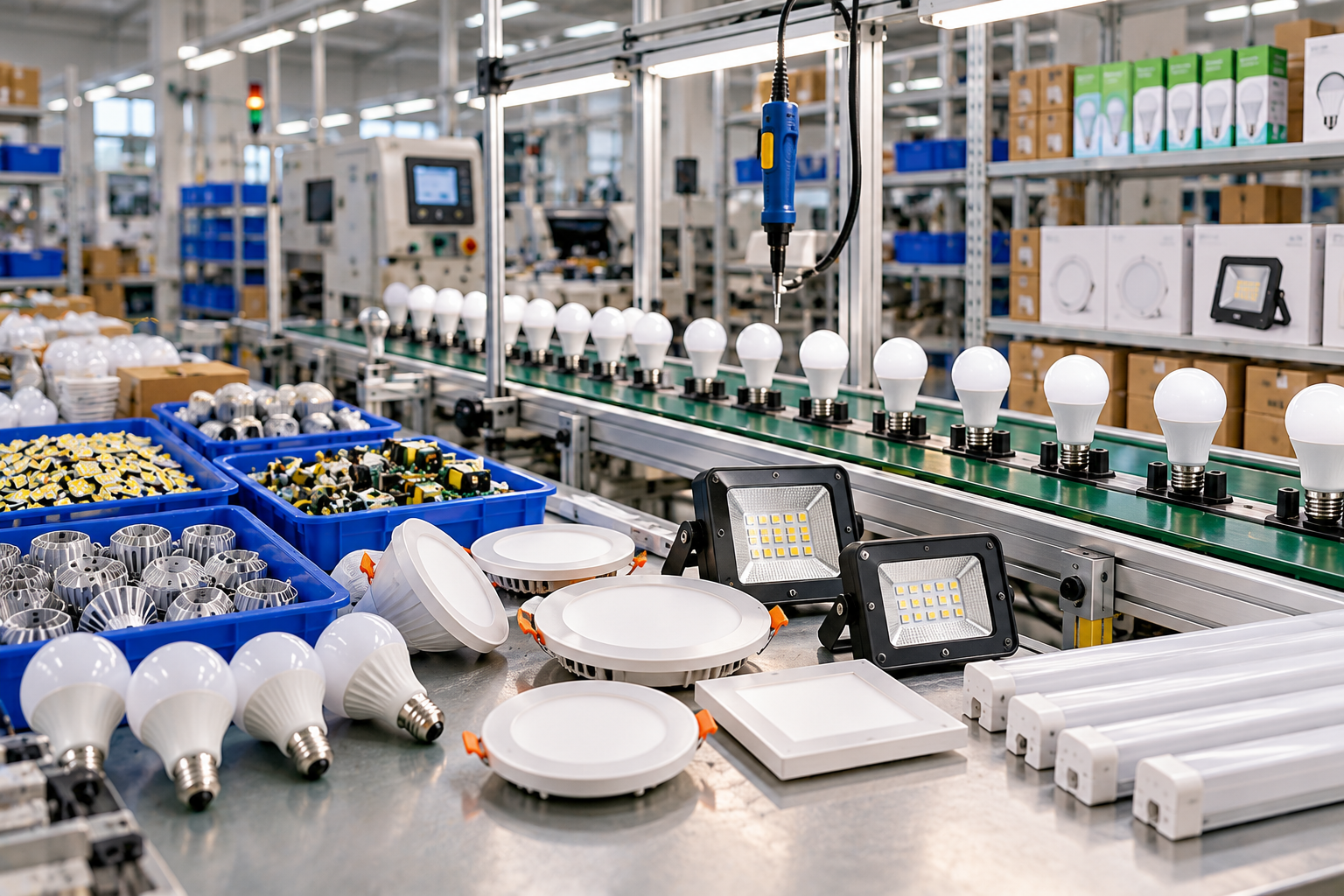
LED Bulb & Fixture Assembly Plant
Semi-automated LED lighting assembly with BIS certification pathway
Restaurant
Full-service dining restaurant

Warehouse Business
Logistics & storage infrastructure
Explore in these cities
Ready to explore your Warehouse business?
Check whether this business suits you or calculate the numbers for your city.
Related reading
How VentureKhoj Helps Indian Entrepreneurs Validate Ideas
VentureKhoj turns gut-feel business ideas into data-backed decisions with a free 8-question assessment and a personalised feasibility report built for Indian founders.
Manufacturing vs Trading Business: Which Wins in 2026?
Manufacturing promises fatter margins but eats capital for years; trading gives faster cash but thinner margins. Here's the numbers-based verdict for 2026.
Best Franchise Businesses in India: Capital, Margins & ROI
A data-backed ranking of 9 franchise categories in India, with real capital, margin and payback numbers by city tier — so you shortlist before signing any agreement.
Best Business Ideas Under ₹10 Lakh in India (2026)
15 practical business ideas you can start under ₹10 lakh in India, with real capital, margin and payback data for Tier-1 to Tier-3 cities.