
Best Business Ideas Under ₹20 Lakh in India (2026)

₹20 lakh sits in an odd but important zone for Indian founders. It's too much to call a side hustle, yet too little to attract institutional investors who typically want to write cheques of ₹50 lakh and above. This is the bracket where a salaried professional's savings, a small property loan, and maybe a family contribution can realistically add up — without betting the house.
The real question isn't "what's trending" but "what converts ₹20 lakh into positive cash flow within 12-18 months." Below is a shortlist built around that filter, with capital, margin and payback figures drawn from typical unit economics across Indian Tier 1, 2 and 3 markets in 2026.
Why ₹20 Lakh Is the Sweet Spot for First-Time Founders
At this budget you can usually afford a small commercial space (rented, not owned), basic equipment, 3-4 months of working capital, and a lean team of 2-4 people. What you can't afford is a long runway for mistakes — so speed of validation matters more than scale.
The Three Filters That Matter
Before picking an idea, run it through:
- Payback period — anything beyond 24 months at this capital size is high-risk for a solo founder.
- Local demand density — does your city/locality have enough paying customers within a 3-5 km radius?
- Owner dependency — can it run without you standing there 12 hours a day within Year 2?
Food & Beverage Business Ideas
F&B remains the most-searched category on VentureKhoj because entry costs are visible and demand is universal — but margins are thinner than people assume.
1. Cloud Kitchen (Multi-Brand)
Run 2-3 virtual restaurant brands from one kitchen, selling only via delivery apps.
- Capital: ₹8-15 lakh
- Margin: 12-18% net
- Payback: 10-14 months
- Best in: Tier-1 and Tier-2 cities with dense delivery-app penetration
Commission of 20-28% from aggregators eats into margin, so a tight menu (12-15 SKUs) and a food cost under 32% of revenue are non-negotiable.
2. Quick-Service Café Format
A 300-500 sq ft café serving coffee, quick bites and packaged snacks in a high-footfall micro-market.
- Capital: ₹15-20 lakh
- Margin: 15-20% net
- Payback: 14-18 months
- Best in: Tier-1 metros and Tier-2 college/office clusters
Rent (usually 8-12% of revenue) and staff (2-3 people) are the biggest fixed costs; average ticket size of ₹150-220 needs 60-80 transactions a day to break even.
Retail & Service Business Ideas
3. Curated Organic/Daily-Needs Grocery Store
A 400-600 sq ft store stocking organic staples, pulses and daily essentials, positioned against unorganised kirana shops on quality and hygiene.
- Capital: ₹10-18 lakh
- Margin: 18-25% gross
- Payback: 12-16 months
- Best in: Tier-2 cities and premium residential pockets of Tier-1 metros
Inventory management is the hardest skill here — perishables above 8% wastage will quietly kill margins.
4. Laundry & Dry-Cleaning Service
A neighbourhood laundry outlet with pickup-drop app or WhatsApp ordering, targeting working professionals and PGs/hostels.
- Capital: ₹8-14 lakh
- Margin: 25-35% net
- Payback: 10-13 months
- Best in: Tier-1 IT corridors and Tier-2 cities with student/PG population
Equipment (washers, dryers, pressing units) accounts for 50-60% of the capital; the rest goes into a small delivery fleet of 2-wheelers.
Education & Skill Business Ideas
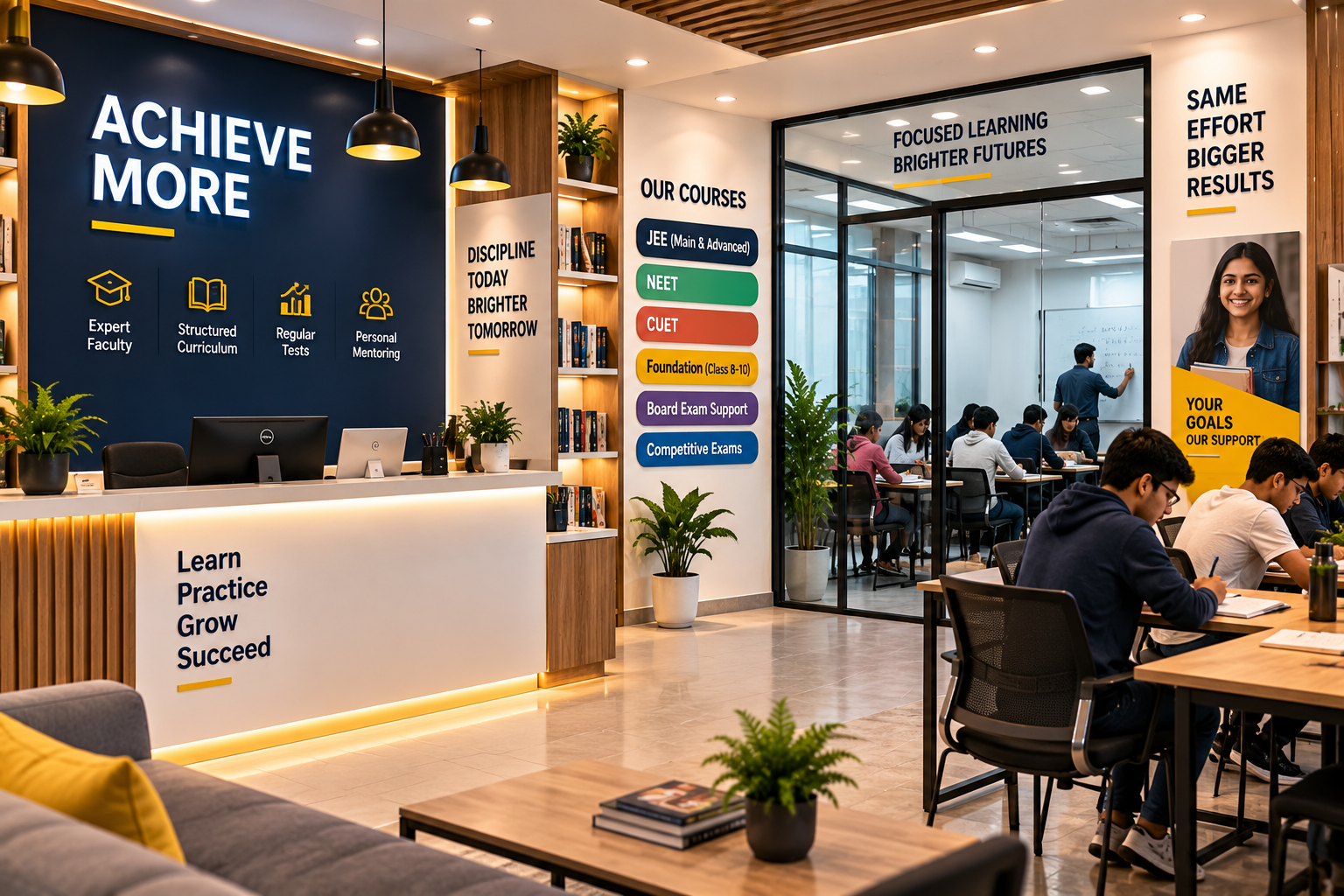
5. Competitive Exam Coaching Centre
A focused coaching centre for one exam category (banking, SSC, state PSC, or school board tuition) rather than a generic "institute."
- Capital: ₹6-12 lakh
- Margin: 30-45% net
- Payback: 8-12 months
- Best in: Tier-2 and Tier-3 cities with strong exam-prep culture (e.g., Kota-style clusters, but scalable to any district town)
Batch sizes of 40-60 students at ₹1,500-3,000/month per student can generate ₹6-15 lakh monthly revenue once two batches run in parallel.
6. Preschool / Daycare Franchise or Independent Setup
A branded or independent preschool for the 2-6 age group, increasingly in demand as dual-income households grow in Tier-2 cities.
- Capital: ₹12-20 lakh
- Margin: 20-30% net
- Payback: 15-20 months
- Best in: Tier-2 cities and growing suburbs of Tier-1 metros
Franchise fees (₹3-6 lakh) buy curriculum and brand recall, but independent setups can undercut fees if the founder invests in local marketing instead.
Digital & Niche Manufacturing Ideas
7. Performance Digital Marketing Agency
A lean agency serving 8-15 SME clients with SEO, paid ads and social media management — almost entirely service-based, low fixed assets.
- Capital: ₹3-8 lakh
- Margin: 35-50% net
- Payback: 6-9 months
- Best in: Any city with internet access; particularly strong in Tier-2/3 cities serving Tier-1 clients remotely
The real capital here is a portfolio and 2-3 anchor clients before you quit your day job — not office space.
8. Custom 3D Printing & Small-Batch Manufacturing
A workshop offering 3D-printed prototypes, custom parts, and small-batch manufacturing for local engineering firms, jewellers and product designers.
- Capital: ₹10-18 lakh
- Margin: 30-40% net
- Payback: 14-18 months
- Best in: Tier-1 industrial clusters and Tier-2 cities with manufacturing/MSME density
Machine cost (₹4-9 lakh for 2-3 industrial-grade printers) is the anchor investment; material cost stays under 20% of job value for most orders.
9. EV Charging Point / Battery Swap Franchise
Setting up 2-4 EV charging points at a petrol pump, mall parking lot, or highway stretch under an existing network's franchise model.
- Capital: ₹12-20 lakh
- Margin: 20-30% net (post revenue-share with network)
- Payback: 18-24 months
- Best in: Highway towns, Tier-1 metros, and Tier-2 cities on national highway corridors
This is the slowest payback on the list but rides a genuine multi-year demand curve as EV penetration in India crosses 8-10% of new vehicle sales by 2026.
How to Choose the Right Idea for Your City Tier
Tier-1 (Mumbai, Bengaluru, Delhi-NCR, Pune)
Higher rent (often 15-20% of a small business's revenue) demands higher ticket sizes — cloud kitchens, cafés and agencies work because delivery density and disposable income are both high.
Tier-2 (Nagpur, Coimbatore, Indore, Lucknow, Jaipur)
Lower rent and staff costs (roughly 30-40% cheaper than Tier-1) make education, grocery and laundry businesses more forgiving on payback — this is often where ₹20 lakh stretches furthest.
Tier-3 and beyond
Coaching centres and daily-needs retail dominate because aspiration is high but competition from organised players is still thin — first-mover advantage lasts longer here.
Key takeaway: At ₹20 lakh capital, the winning move isn't chasing the highest-margin idea on paper — it's matching payback period and owner-dependency to your city's actual demand density and your own risk appetite.
Every number above is a starting range, not a guarantee — actual margins shift with location, competition and how disciplined you are with cost control in the first six months.
If you're still weighing between two or three of these, don't guess. VentureKhoj's free 8-question feasibility assessment maps your capital, skills and city against real market data, and generates a personalised feasibility report in minutes — with deeper location and financial modelling available in our Founder and Growth plans.
Frequently asked questions
Which business under ₹20 lakh has the fastest payback in India?
Service-led businesses with low fixed assets, like a digital marketing agency (6-9 months) or a competitive exam coaching centre (8-12 months), tend to have the fastest payback because they don't require heavy equipment or inventory investment.
Is ₹20 lakh enough to start a cloud kitchen in a Tier-1 city?
Yes, ₹8-15 lakh is typically sufficient for a compact multi-brand cloud kitchen, but you should budget an additional 3-4 months of working capital to survive the initial low-order-volume phase before delivery apps build your visibility.
Are franchise businesses better than independent setups under this budget?
Franchises reduce execution risk and give instant brand recall, but franchise fees (₹3-8 lakh typically) reduce your working capital cushion; independent setups need stronger local marketing skills but keep more margin in your pocket.
Which idea works best in a Tier-3 city with ₹20 lakh?
Coaching centres and daily-needs retail generally perform best in Tier-3 cities because competition from organised players is limited, aspiration for education and quality retail is high, and operating costs (rent, staff) are significantly lower than metros.
How much working capital should I keep aside beyond the setup cost?
As a rule of thumb, reserve 20-25% of your total ₹20 lakh budget purely as working capital to cover 3-4 months of rent, salaries and inventory before the business becomes cash-flow positive.
Can I validate these ideas before committing the full ₹20 lakh?
Yes — most of these ideas (coaching, digital agency, cloud kitchen) can be soft-launched with 30-40% of the full capital to test local demand before scaling up equipment, space or staff.
Franchise opportunities in low-capital
Vetted brands actively expanding. Tap to see investment, cities, and connect directly.
At Vaatsalya Kids, we create a joyful and nurturing environment where little learners take their first steps towards education. Through play-based learning, caring teachers, and engaging activities, we help children grow with confidence, creativity, and happiness.
At Future Kidds Play School, we specialize in early childhood education for children aged 2 to 5 years, blending innovation with care to create a joyful learning experience. Our curriculum integrates technology, scientific teaching techniques, foundational education, and creativity, making us a truly unique play school in India. Though this, our school aims to provide a solid foundation for the future of the nation.
Business ideas matched to this article


Explore in these cities
Ready to explore this business?
Check whether this business suits you or calculate the numbers for your city.
Related reading
Smart Vending Machine Business in India: Setup Costs, Unit Economics, and High-Footfall Locations
A practical breakdown of what it really costs to run vending machines in India, the margins you can expect, and where to place them for maximum daily transactions.
12 Profitable Business Ideas After Retirement in India (2026)
From consulting to tiffin services, here are 12 realistic post-retirement business ideas in India with capital, margin and payback estimates for 2026.
Best Business Ideas Under ₹10 Lakh in India (2026)
15 practical business ideas you can start under ₹10 lakh in India, with real capital, margin and payback data for Tier-1 to Tier-3 cities.
Top 10 Business Ideas Under ₹5 Lakh in India (2026)
The ten most reliable low-capital businesses to start in India this year — vetted for margin, break-even and city fit.